International social security agreements are formal treaties between two or more countries that protect the rights of people who move across borders for work or residency. They are especially important for migrant workers, retirees and international employers, because they help ensure fairness and continuity in social protection. In some cases, they allow the cumulation of years worked in two or more countries so that pension qualifying conditions can be met.
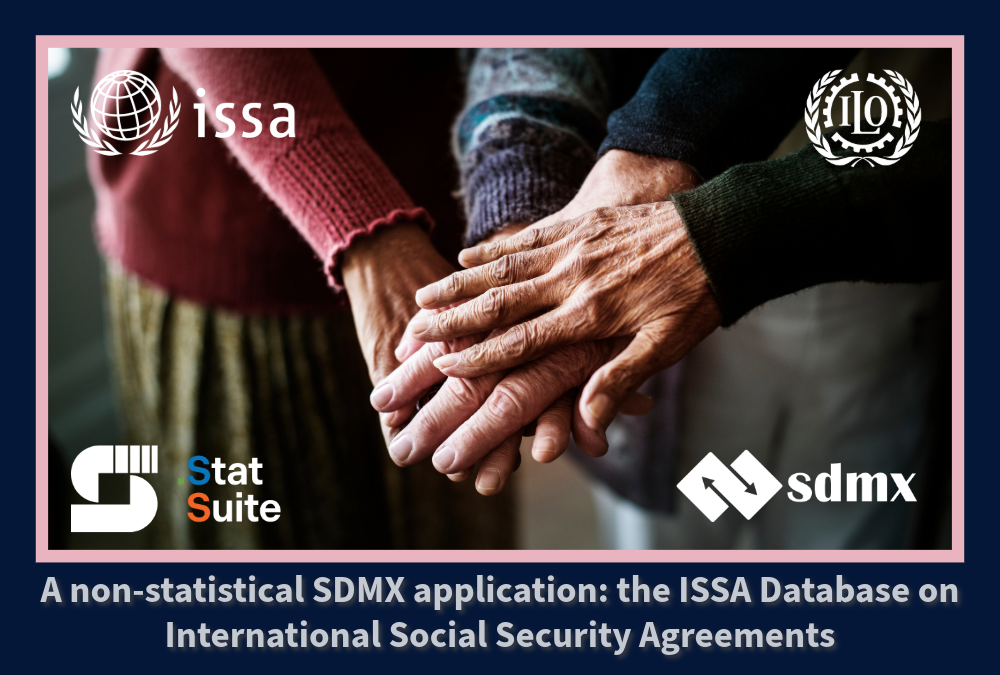
Access to this information is supported by the International Social Security Association (ISSA) – the global organisation for social security institutions, government departments and agencies. Its work supports the development and administration of social security systems around the world, making it a natural home for an initiative focused on international social security agreements and their practical implementation. In partnership with the International Labour Organisation (ILO) Department of Statistics, ISSA developed a database on international social security agreements using SDMX as the statistical model and the .Stat Suite Data Explorer as the user interface. As a case study, the project provides a practical example of how SDMX and the .Stat Suite can be applied beyond conventional statistical dissemination.
What the database covers
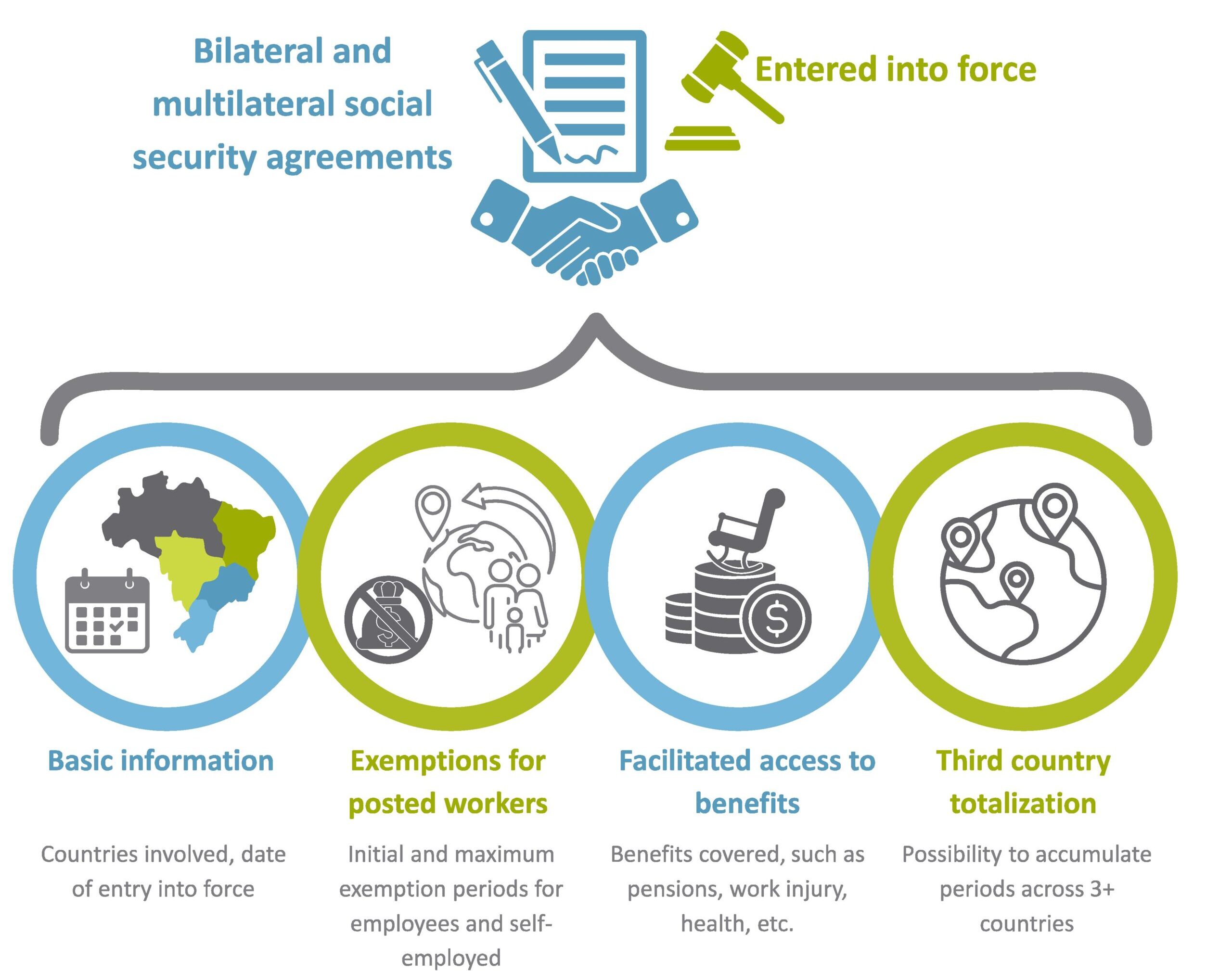
The database focuses on bilateral and multilateral social security agreements that have entered into force. It brings together basic information such as the countries involved and the date of entry into force, as well as more detailed provisions on exemptions for posted workers, including initial and maximum exemption periods for employees and self-employed persons and detailed provisions on facilitated access to benefits and third country totalization.
Using SDMX and the .Stat Suite to structure qualitative content
The database is an interesting example of a non-statistical SDMX application. SDMX is used to structure qualitative agreement content and benefit classifications, making it possible to filter and compare across countries, time periods and agreement types. Through the pilot ISSA-ILO .Stat Data Explorer, users can explore complex, text-based and multidimensional data on agreement provisions within a structured interface.
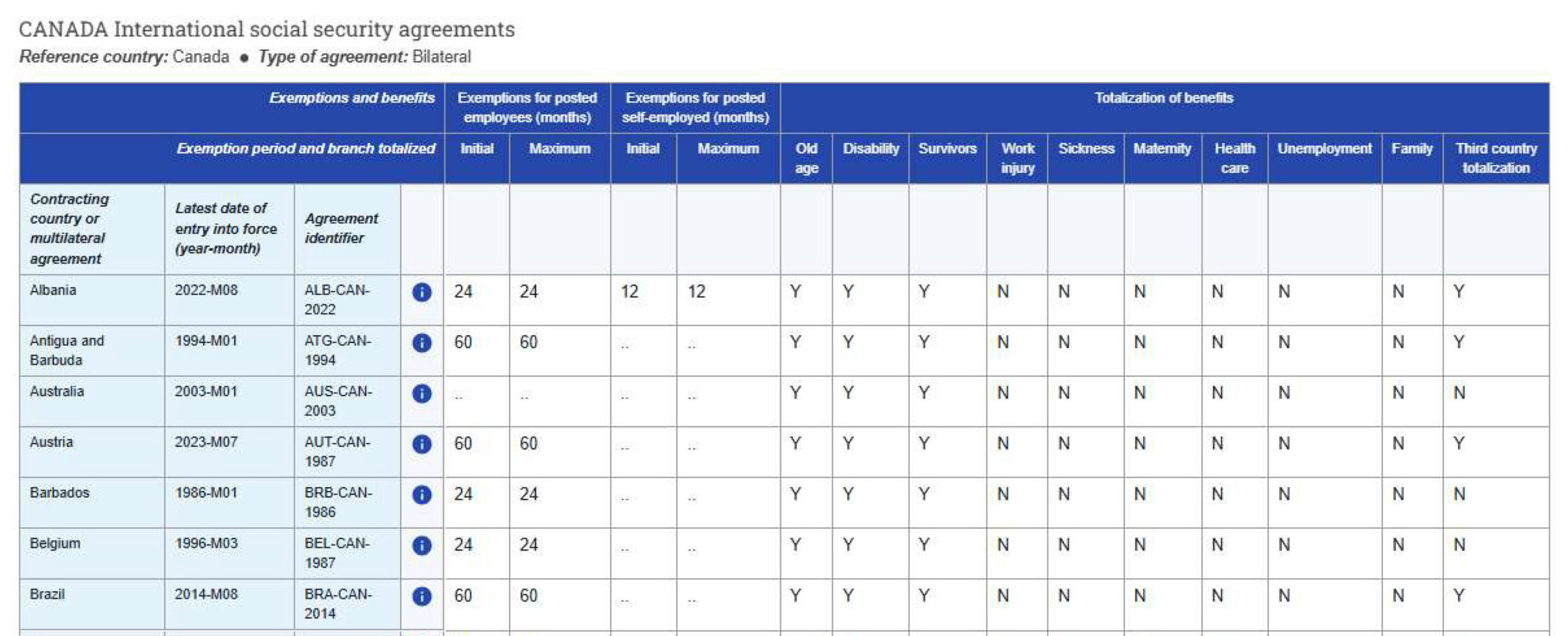
The pilot also shows that standard .Stat Suite functionalities are relevant for non-statistical data. The interface links individual records to agreements and notes, supports the selection of multiple countries, lets users change the layout, switch between names and identifiers such as ISO 3 codes, and download tables to Excel or CSV. This gives users a more flexible way to compare agreement provisions and extract the information they need.
From exploration to data exchange
The initiative also points to applications beyond dissemination. To implement international agreements, data exchange is needed to establish eligibility and to support payment continuity and compliance enforcement. There are several data needs in this area, including workers’ personal data, residence status, worked periods across countries, life-status validation, and income and residence information. To answer those needs, ISSA is launching a project to use SDMX to standardise different data types and support data exchange operations through a DSD and standardised dataflows, with life-status validation as the priority use case.
Looking ahead, and now that the database is officially launched, the pilot project team at ISSA is aiming to activate a multilingual interface, continue the work on data exchange, and explore other visualisations using the SDMX web service.
For the SIS-CC Community, the project also connects with a longer-standing collaboration with the International Labour Organization (ILO). As a longstanding member of the Community, the ILO has helped drive the LMIS project and broader use of SIS-CC tools in labour market and statistical information systems. Readers interested in that wider context can also read our earlier interview with Edgardo Greising on ILO’s experience with the .Stat Suite and its perspective on the Community.